


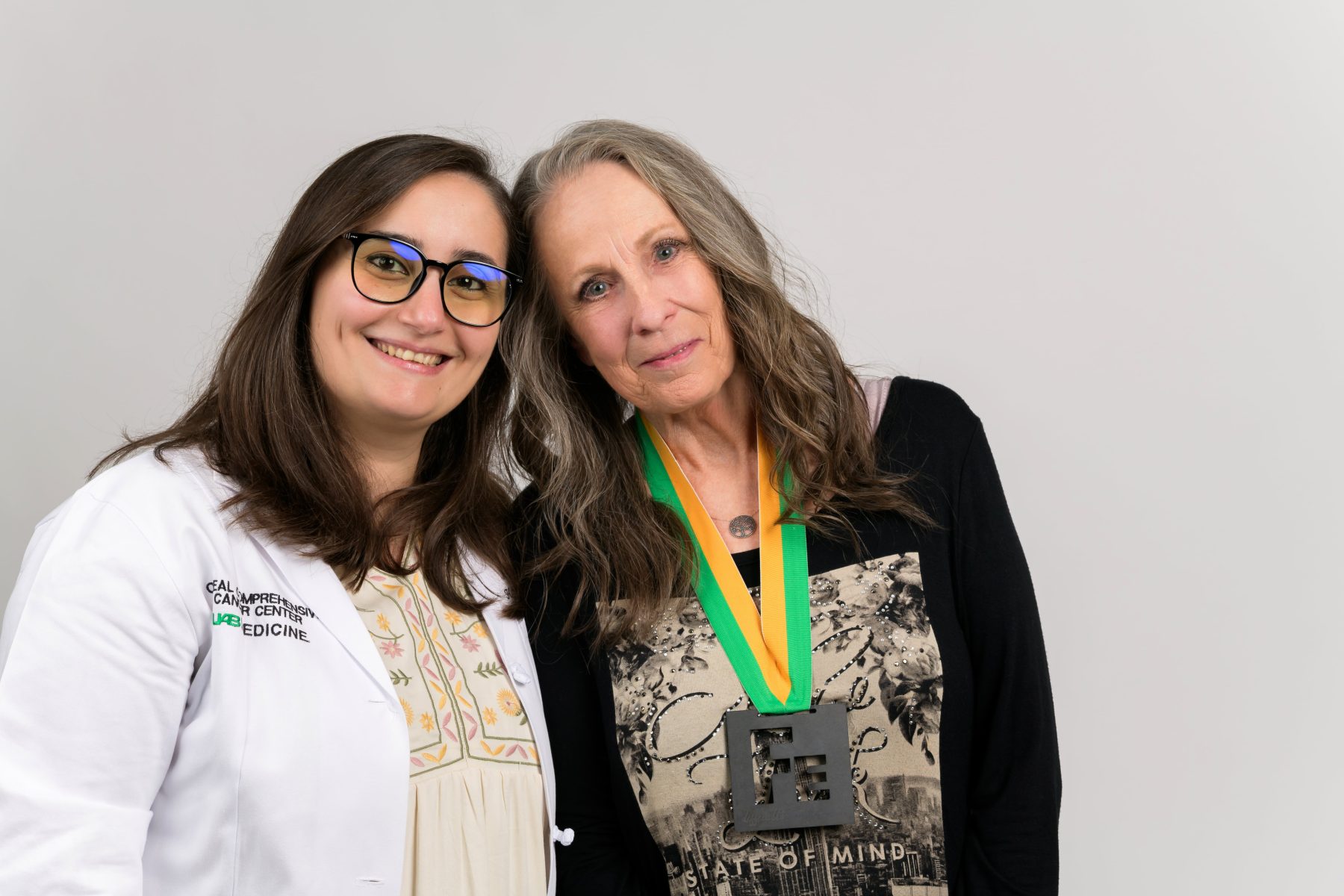
Wanda Harrod
Wanda Harrod woke up on Aug. 4, 2021, with lingering neck pain that had been bothering her for a few days. She attributed it to soreness from working at her job as a hairdresser and made an appointment to see her chiropractor.
Before the end of that day, Harrod was having surgery to remove a tumor on her spine that was so large it had created a fracture in the bone, which was causing the neck pain. It also was discovered that the tumor had spread from its origin in the lung. Harrod was diagnosed with stage 4 non-small cell lung cancer, which had a survival rate of less than 15 percent.
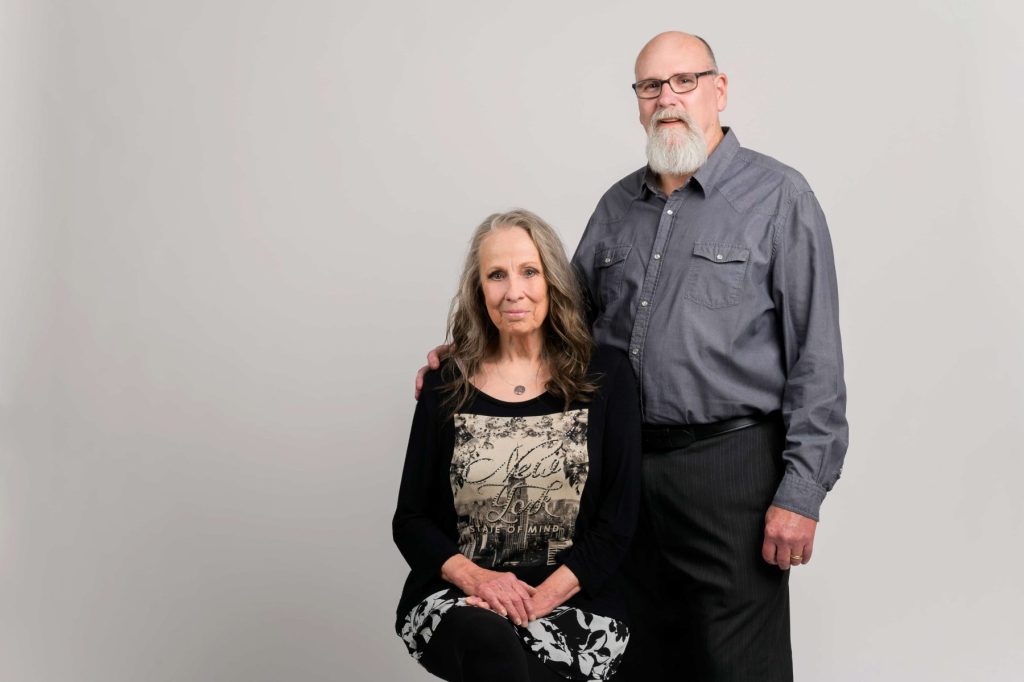
“All that happened in one day,” Harrod says. “August 4, 2021, doesn’t go away for me. I’ll always remember it.”
Since then, however, Harrod has had several good days to remember as well. Two months after the initial diagnosis and surgery, Harrod began treatment through a clinical trial that added a second immunotherapy drug to the regular standard-of-care. The remaining cancer in her body began to shrink steadily, and by the end of 2022, the primary tumor on her lung had become smaller than the size of a marble.
Unfortunately, after 15 months of treatment, the drugs began to cause severe inflammation in her stomach, and Harrod eventually was taken off that therapy. However, enough progress already had been made that most of the residual cancer was more easily treated through radiation. And for the past two years, regular CT scans have shown no signs of reactivation.
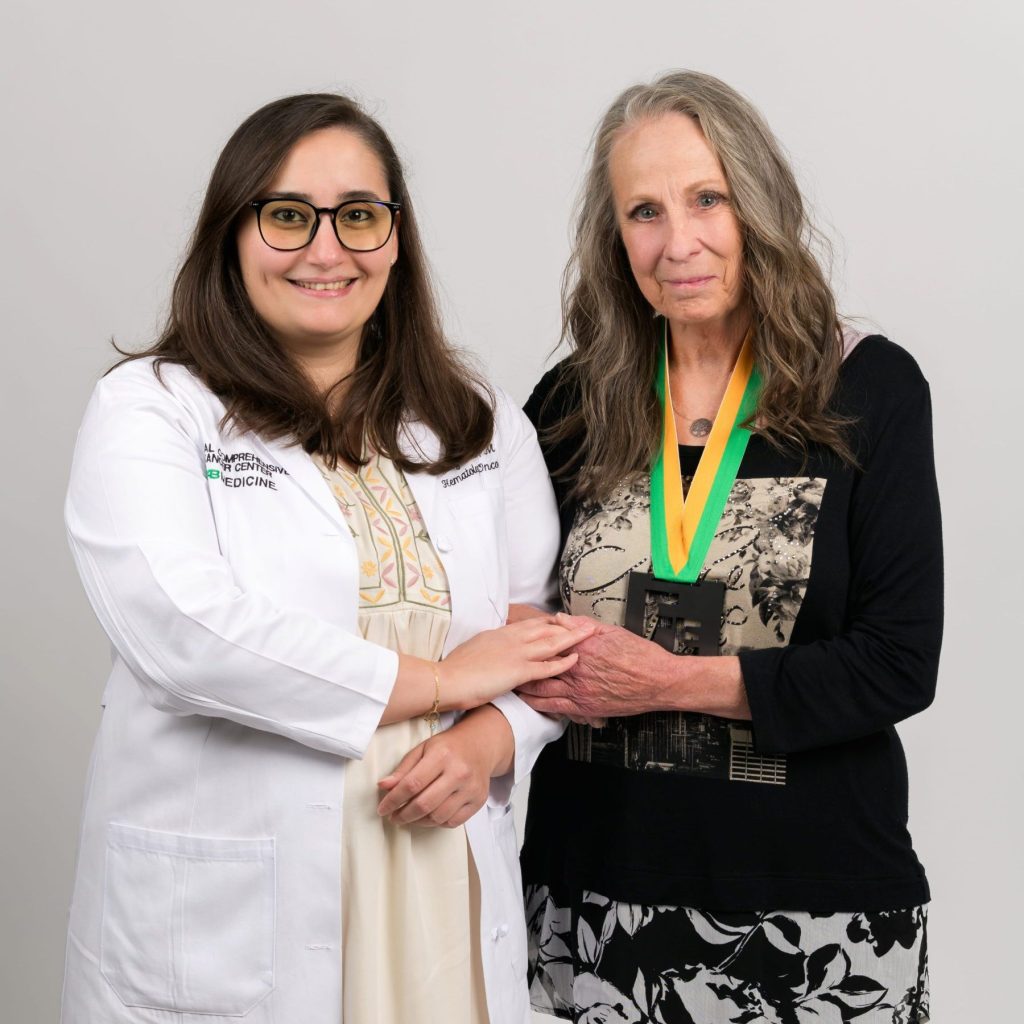
“That is almost unheard of in metastatic lung cancer, but her disease responded beautifully to the immunotherapy,” says Maya Khalil, M.D., an Assistant Professor of Medicine in the Division of Hematology & Oncology at UAB. “It did cause side effects, which can be an unfortunate part of medicine. But she derived a lot of benefit in terms of getting the cancer under control.
“She has been through a lot with the treatment and the side effects. But she’s a fighter. She still has a positive attitude about everything, which is remarkable.”
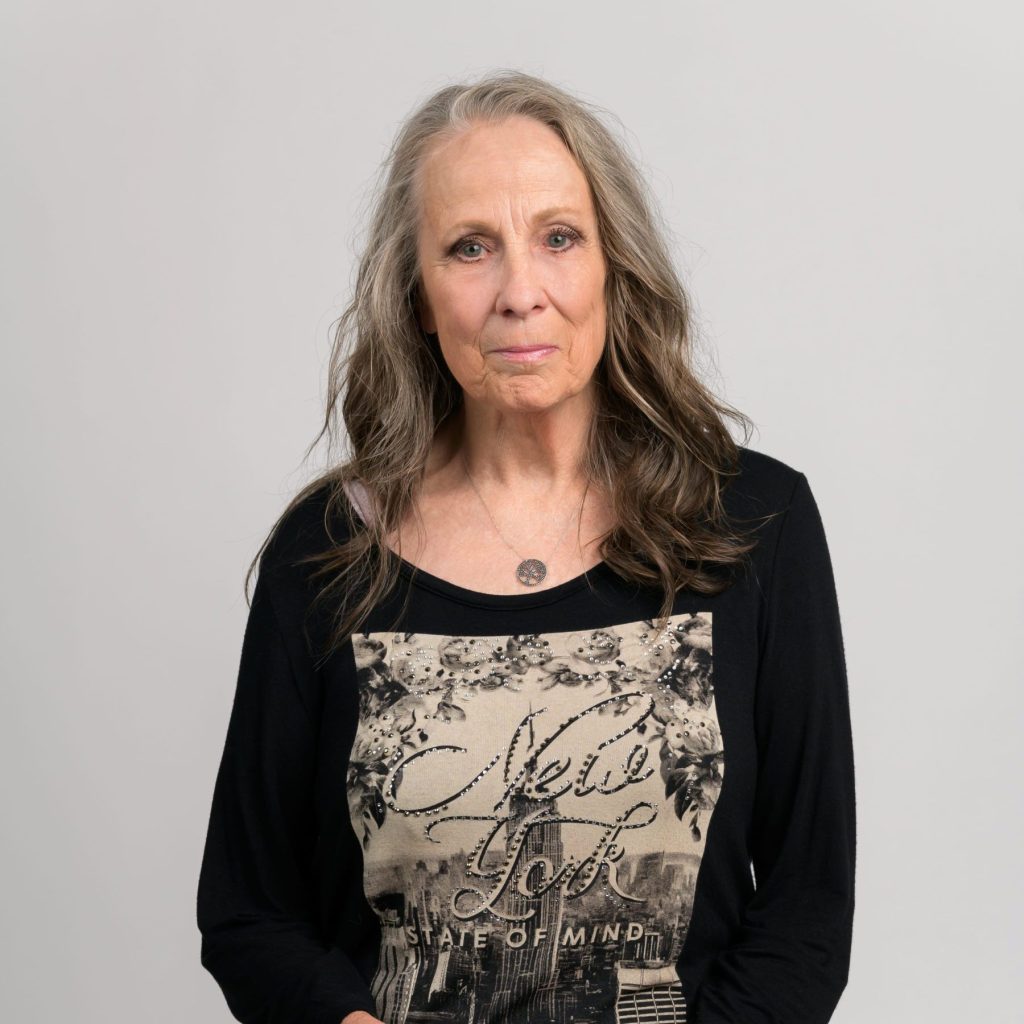
Indeed, while stating that the days since Aug. 4, 2021 definitely have been difficult at times, Harrod says she cannot complain about the current outcome.
“The people at UAB saved my life,” Harrod says. “Had my cancer gone on much longer (before being discovered), I’d probably have died. And even after surgery, there was a time when I wouldn’t have made it six months with that type of cancer. Instead, I’m still here four years later, and I do just about anything I want to do.
“These trials are what makes that possible. If you don’t have people doing these trials, then the medicines can’t be tested. And they can’t learn about them if they can’t use them. I’m glad I was a part of something that helped me, and might help someone else down the road.”