


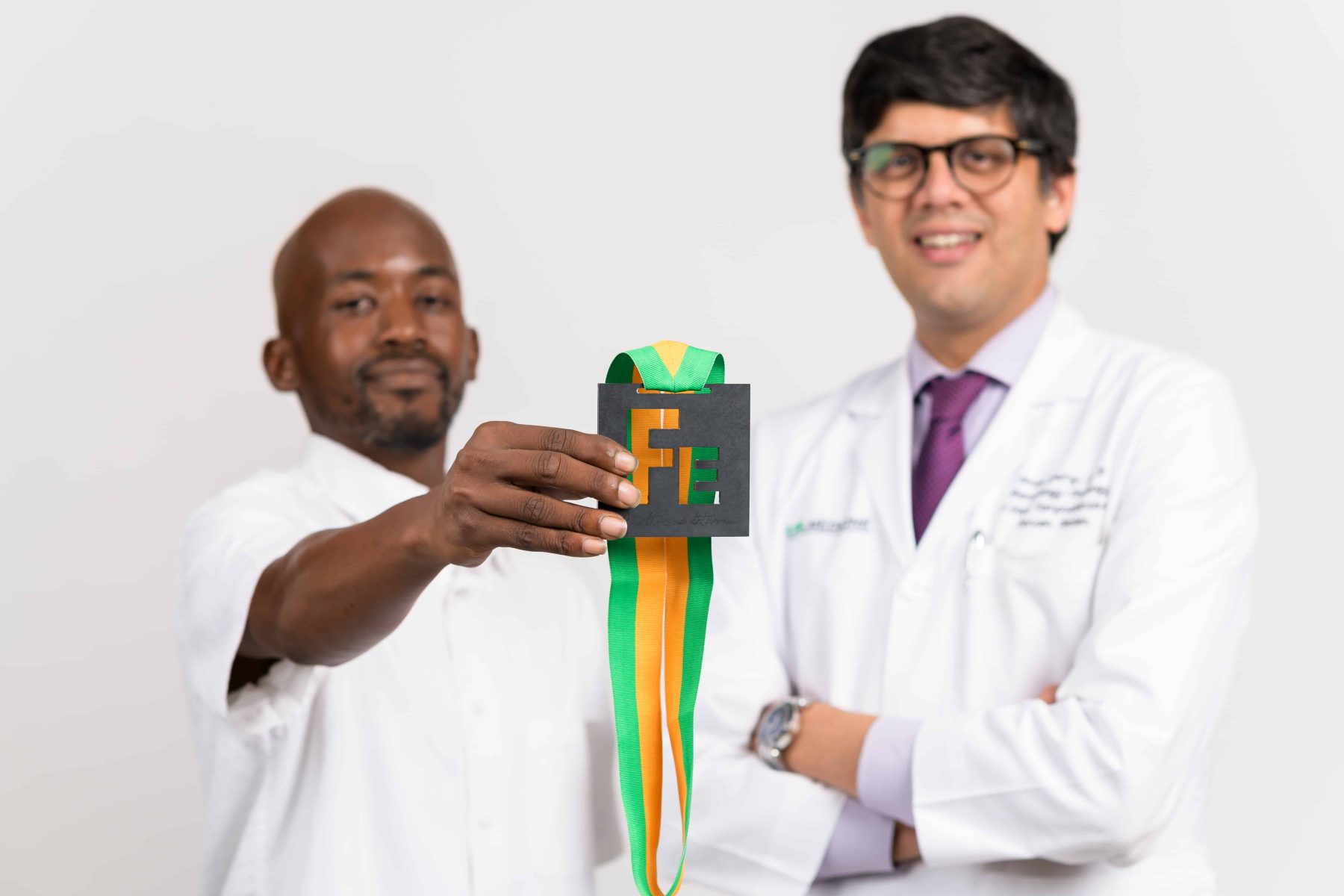
Jessie Webb
After Jessie Webb was diagnosed with chronic myeloid leukemia 20 years ago at age 15, medication became a regular part of his life. Eventually, Webb was taking nearly a dozen pills every single day.
“I took so many different medications for so long, I just got used to it,” Webb says.
The problem was that the doctors warned Webb that such a routine could have a detrimental effect on his heart and other organs with decades of repetition. Plus, there was evidence throughout his 20s that the effectiveness of the medications was slowly diminishing.
“We explained to him that the chances of the pills giving him long-term control of the disease were low, especially because his leukemia had become more aggressive since it was first diagnosed,” says Omer Jamy, M.D., an associate professor at UAB O’Neal Cancer Center specializing in hematology and oncology. “So we suggested at his young age, he should consider a bone marrow transplant.”
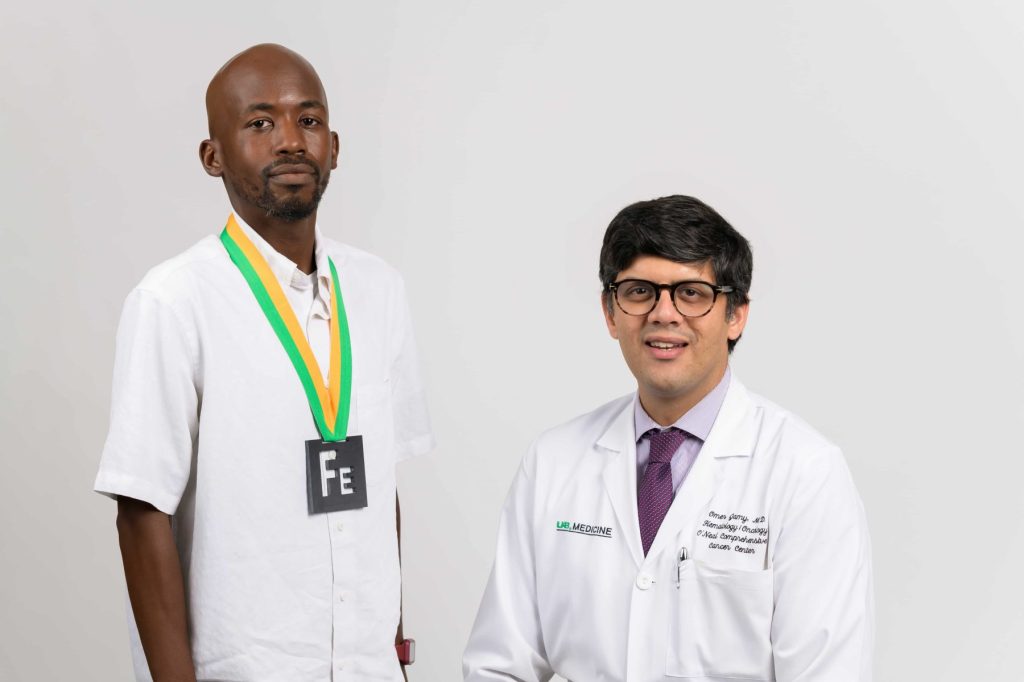
Webb agreed and underwent the procedure in 2021. He also signed on to be part of a Hematopoietic Stem Cell Transplantation clinical trial, a Phase 3 study in which half the participants were given an additional medication called Vedolizumab to test if it can help prevent graft-versus-host disease (GVHD) of the lower gastrointestinal tract.
“GVHD is one of the complications that can occur from a bone marrow transplant, and it can lead to all sorts of problems, even death,” Jamy says. “Every person who gets a donor transplant, we give them medicines as standard of care to prevent GVHD, but people still end up getting it. So a lot of research is geared toward trying to prevent this complication in our patients.”
Webb admits he initially was hesitant to participate, but eventually decided he had already taken so many medications in his life that it probably wouldn’t hurt to try one more.
“I was a little iffy at first, not knowing how I’d react to it,” Webb says. “But they talked me through everything and made sure I knew exactly what was going on. So I decided to try it and see how it would turn out.”
Webb was one of 343 patients to take part in the trial, with UAB O’Neal Cancer Center supplying 70 of the participants. Since it was a blind trial, Jamy says it is not known whether Webb actually received Vedolizumab. But he says Webb came through the transplant with no complications, and more than four years later, he continues to test negative for both leukemia and GVHD.
The results of the study, which were published last year in the journal Nature Medicine, showed that adding Vedolizumab to standard therapy decreased the chances of a patient developing GVHD and improved the overall outcomes.
As for Webb, not only does he remain in remission, but he says, “I am down to taking only one pill a day. So that’s good.”