


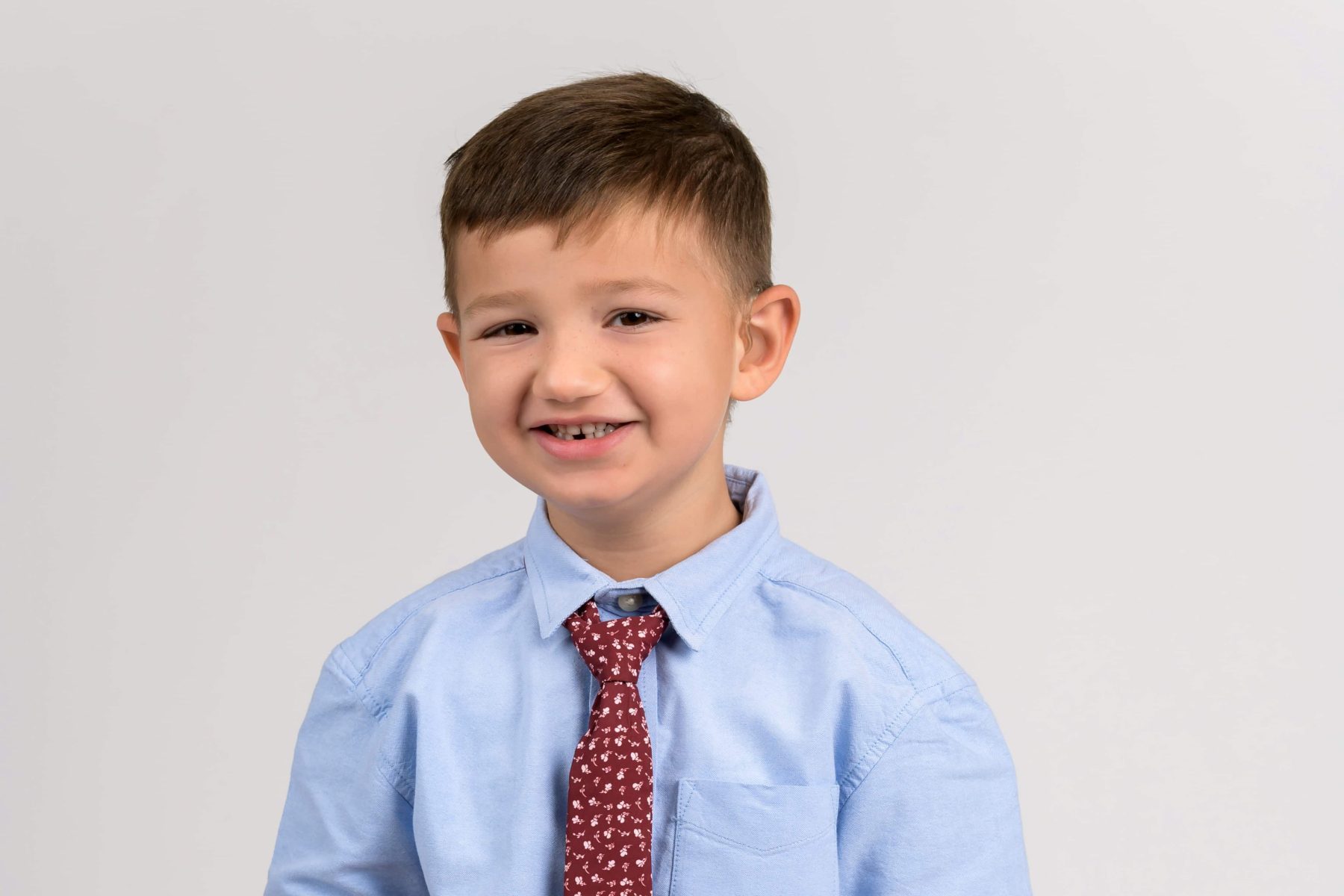
Kingston Jessip
Kingston Jessip has dealt with a lot in his struggle with high-risk neuroblastoma cancer. Six months of induction chemotherapy. Surgery to remove as much of the tumor as possible. Another round of high-dose chemo, along with two stem cell transplants. Then radiation, followed by six months of immunotherapy.
It is enough to wear down the heartiest of individuals, and Kingston definitely had some anger issues along the way. What makes his situation particularly amazing is that all this treatment occurred before Kingston’s 6th birthday, and took place without much input from his biological parents, who have substance-abuse issues.
But two things happened that helped Kingston come through it all and has provided a more optimistic outlook on his young life. First, his treatment included two clinical trial medications designed to improve the current 50 percent survival rate for children with neuroblastoma.


“We looked at the genetics of the tumor upfront to find a targeted medicine that we could add to his treatment,” says UAB pediatric oncologist Emily Johnston, M.D. “Then we added another medicine, DFMO (difluoromethylornithine), to the treatment after he was finished with everything else. That drug is now FDA-approved because of these clinical trials.”
The medical results have been successful so far, as Kingston is now 7 years old and is currently cancer-free. In addition, Kingston’s emotional situation has improved as well, partly because he has a new home in Cullman with foster parents William and Barbara Jessip. They agreed to adopt Kingston after hearing about his situation at a church prayer meeting, even though they are in their late 60s.
“This wasn’t in our retirement plan,” Barbara Jessip says with a laugh. “But because of his condition, they were having a hard time finding anyone in the state who would take him. We really felt led to do this, though we’re not spring chickens. But since we’re retired, we have the time to give him the care and attention he needs.”
Jessip acknowledges that Kingston was dealing with some significant anger issues while undergoing treatment. She attributes that to the fact he had been painfully poked and prodded throughout his young life. Jessip says she was impressed at how well the nurses and others who were treating Kingston handled his frequent outbursts.
“His social skills had deteriorated, and he was lashing out at everyone,” Jessip says. “But Dr. Johnston and the nurses all had tremendous compassion. I never saw them get frustrated.”
Jessip says Kingston is steadily improving both physically and emotionally, and even played organized T-ball this year.
“He has been such a blessing to us, even at our age,” Jessip says. “He’s still a scrapper. He won’t back down to anything. But I attribute that part of his personality to how he was able to pull through. Because if he hadn’t been such a scrapper, I don’t know if he would have survived.”