


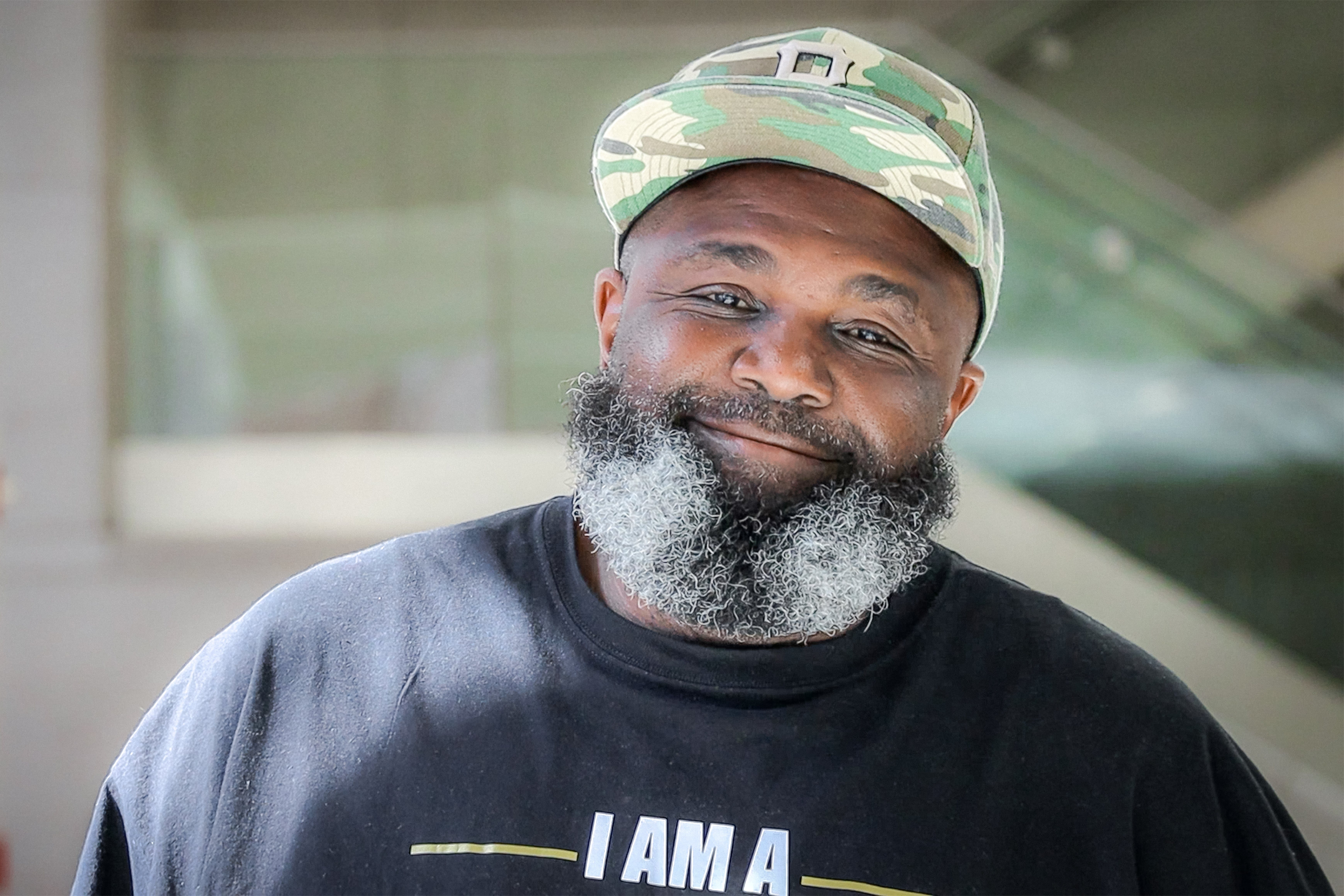
Gregory Walker
Iron Strong Awards 2026
Physician: Kelly Godby, M.D., and Luciano Costa, M.D., Ph.D.
Cancer type: Multiple myeloma
Cancer is scary for anyone. Some patients find the courage not only to seek treatment on their own behalf but also to participate in clinical trials for the benefit of others.
United States Navy veteran Gregory Walker had served three tours of duty during Operation Desert Storm and Operation Iraqi Freedom. After being diagnosed with a rare type of blood cancer called multiple myeloma, he participated in two different clinical trials at UAB. One of them helped lead to approval by the U.S. Food & Drug Administration (FDA) for a drug combination for patients whose cancer has relapsed.
Walker was diagnosed with multiple myeloma in 2020. “I was scared, because when you hear the word ‘cancer,’ you think it’s the end,” he said. Multiple myeloma was suspected following Walker’s weeklong stay at the Clearview Cancer Institute in his hometown of Anniston, Ala. With multiple myeloma, abnormal plasma cells accumulate in the bone marrow, and it often requires a complex sequence of treatments. Doctors recommended that he transfer his care to the UAB O’Neal Cancer Center, where his diagnosis was confirmed.
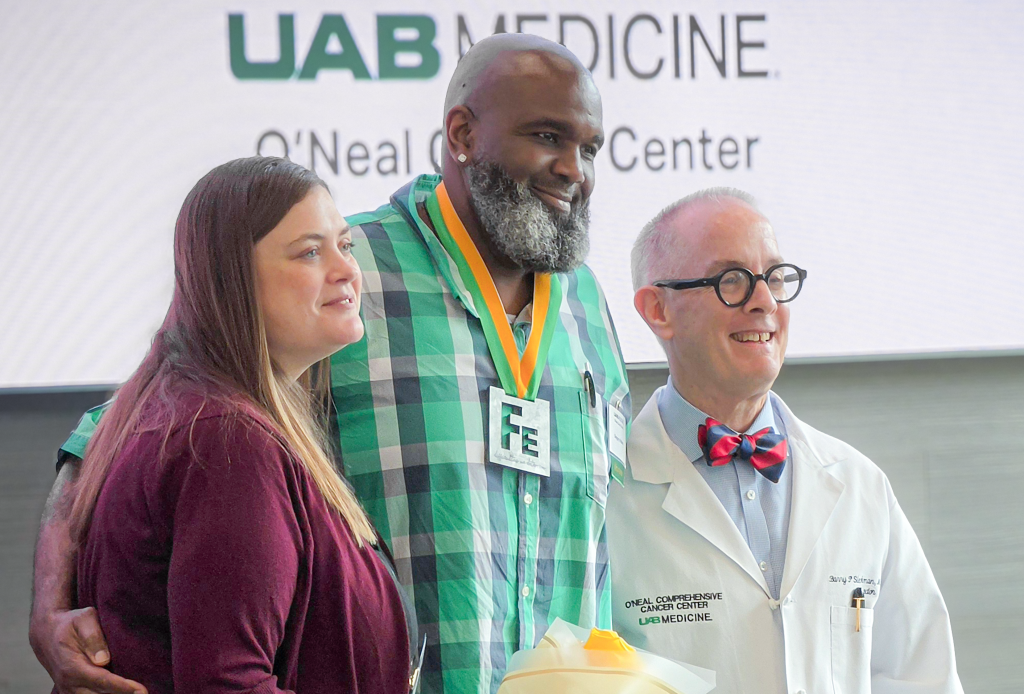
A goal of helping others
Walker wanted to make sure his experience did as much good as possible.
“I told them if my treatments and lab results will help other people, I don’t mind doing it,” Walker said. “It’s give and take. They helped me, so now I’m helping someone else.”
His treatment was led by UAB multiple myeloma specialists Kelly Godby, M.D., and Luciano Costa, M.D. They also helped Walker enroll in a clinical trial designed to determine the depth of response to chemotherapy treatment for multiple myeloma. Within a year, Walker no longer had any signs of the disease. The therapy ended, though he remained under observation.
In 2023, however, the cancer returned. That’s when Walker agreed to a second trial specifically for patients who had relapsed. The MajesTEC-3 study evaluated the combination of two antibody-based immunotherapies, teclistamab and daratumumab.
“The data from that trial showed that after three years, patients were almost three times as likely not to have had their cancer return,” Dr. Godby said. “Based on that, it led to FDA approval. Now we’re using that in the early relapse setting, thanks to trial patients like Mr. Walker being brave enough to try it.”
Walker says his bravery came with help from others at UAB. He recalls one medical assistant in particular who gave him words of encouragement before he started his first cancer treatment.
“I was nervous, because I didn’t know what was going to happen,” Walker said. “There was a person who met me who saw my veteran hat and said, ‘You’re going to be all right. You’ve got this, soldier.’ The team at UAB, I wouldn’t trade them for anything. They took care of me.”
Spreading the word
In turn, Walker is trying to do his part to help others by spreading the word about the value of clinical trials and the quality of care he received at the O’Neal Cancer Center.
“Mr. Walker doesn’t advocate just for himself. He goes into the community and brings awareness of the disease and advocates for trials,” Dr. Godby said. “He’s able to reach people who it’s hard for the medical community to reach and help them understand why trials matter. That he’s doing well now is because of his willingness to listen to the science, to not be afraid, and to try.”
“You have to be altruistic sometimes to be a cancer patient participating in a trial,” Dr. Godby continued. “You have to believe that even if you don’t benefit from it, if you advance the science, then other people will benefit from these trials. He always had that faith that he wanted to do the right thing for himself and for others.”