


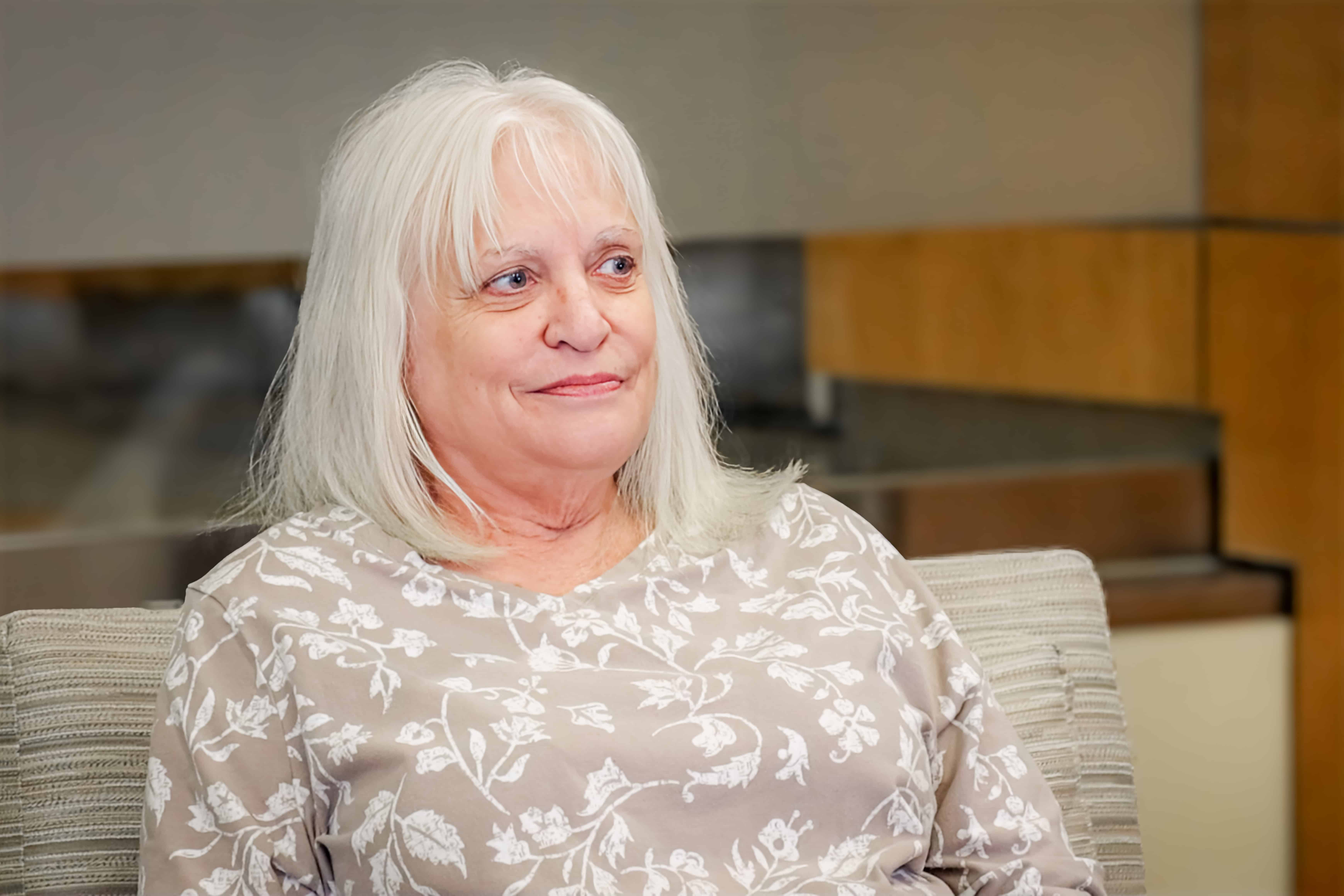
Randi Cummings
In 2021, Randi Cummings moved from her longtime New York home to Birmingham after her daughter and son-in-law took research positions at UAB. Two years later, Cummings was diagnosed with gallbladder cancer.
By then, she had become confident in the quality of care available at UAB O’Neal Cancer Center and chose to remain here for treatment, rather returning to New York. Cummings also chose to participate in a clinical trial.
“I could have gone back to Manhattan, but I was very comfortable staying here,” Cummings said. “I was happy with the people at UAB, so I wasn’t about to go anywhere else.”
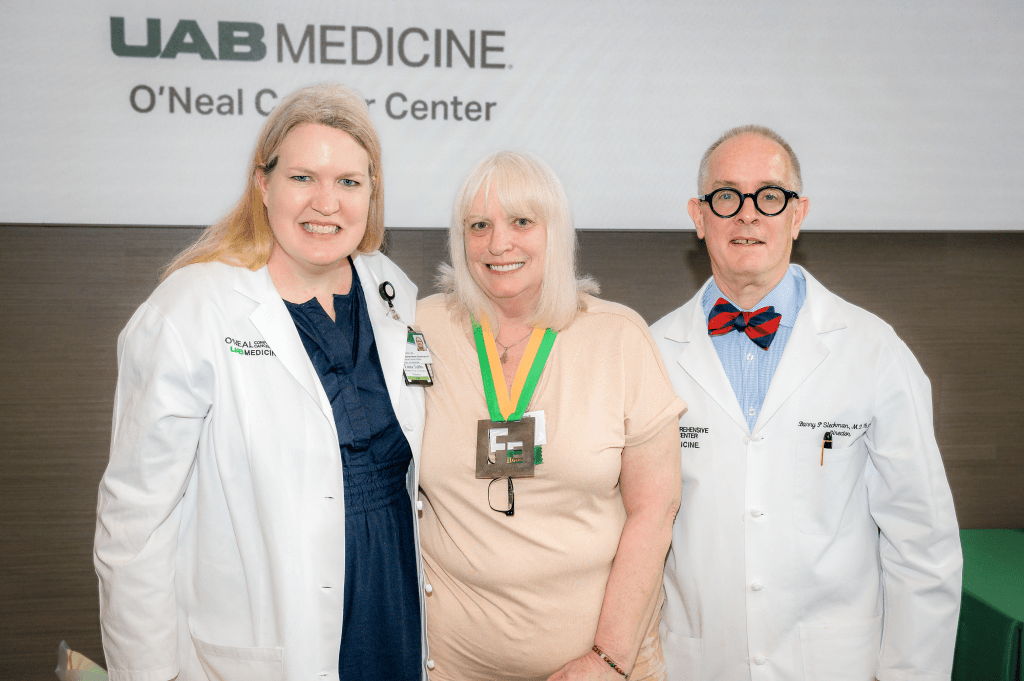
Managing side effects
The current standard-of-care treatment for the type of cancer Cummings had is a liver resection (partial removal) to determine the scope of the cancer, followed by two consecutive eight-week rounds of chemotherapy. However, due to the toxicity of this treatment, UAB surgical oncologist J. Bart Rose, M.D., suggested that Cummings enroll in a clinical trial. She would undergo a single round of chemo before liver resection, followed by additional chemo as needed.
“Dr. Rose was wonderful in explaining everything,” Cummings said. “I discussed it with my daughter and son-in-law, and we decided that there was no downside to trying it.”
Cummings believes that splitting the chemo helped keep her side effects manageable. “I got a little bit sick from it, but it was nothing horrible,” she said. “I really didn’t feel that bad.”
For two years following her second round of chemotherapy, Cummings returned to UAB for a cancer scan once every three months. She was cancer-free each time, and so her scans were reduced to once every six months. “I meet with the physician assistant each time after the follow-up scans, so we’re pretty good friends by now,” Cummings said. “The nurses and doctors at UAB have been absolutely amazing. They’ve all done their best to make me feel comfortable.”
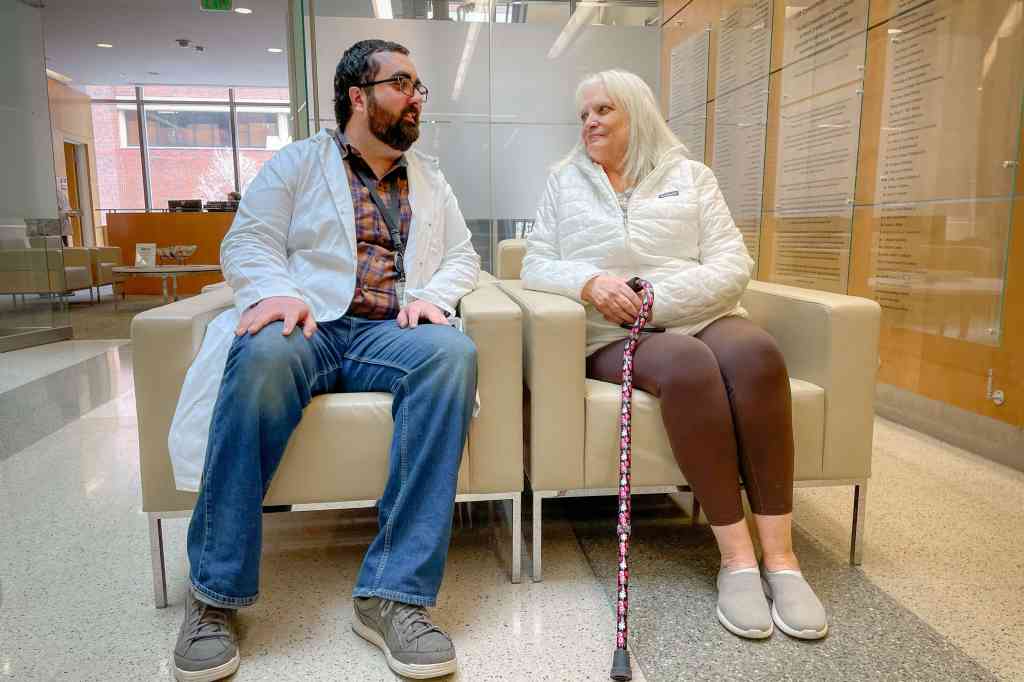
An altruistic patient
Dr. Rose says researchers are still gathering and analyzing data from this clinical trial, so it’s unclear whether there are any significant advantages to splitting the chemo treatments. So, while he can’t say for certain that Cummings benefited from that approach, he says that’s not necessarily the purpose of this trial.
“Her case highlights that there are a lot of clinical trials that are not going to directly benefit the patients who are in them, but they’re designed to answer questions that we sometimes don’t know the answers to yet,” Dr. Rose said. “Is this way of combining treatments better than another?”
“This was really a trial that is for the betterment of society, not necessarily just for her,” he continued. “She’s a very altruistic person who recognized that. There are a lot of people like her who are willing to participate in these types of trials because they want to help their family, their friends, their neighbors – anyone who has to go through what they’re going through. They want it to be better for them.”