




O’Neal Iron Strong Awards – 2025 Honoree Testimonies
The medical discoveries of today become the standards of care for tomorrow. This transition is made possible by clinical trials, in which patients are treated with promising new therapies based on these research discoveries.
Every year, the O’Neal Cancer Center honors clinical trials patients at the Iron Strong Awards. These are the stories of the 2025 honorees.
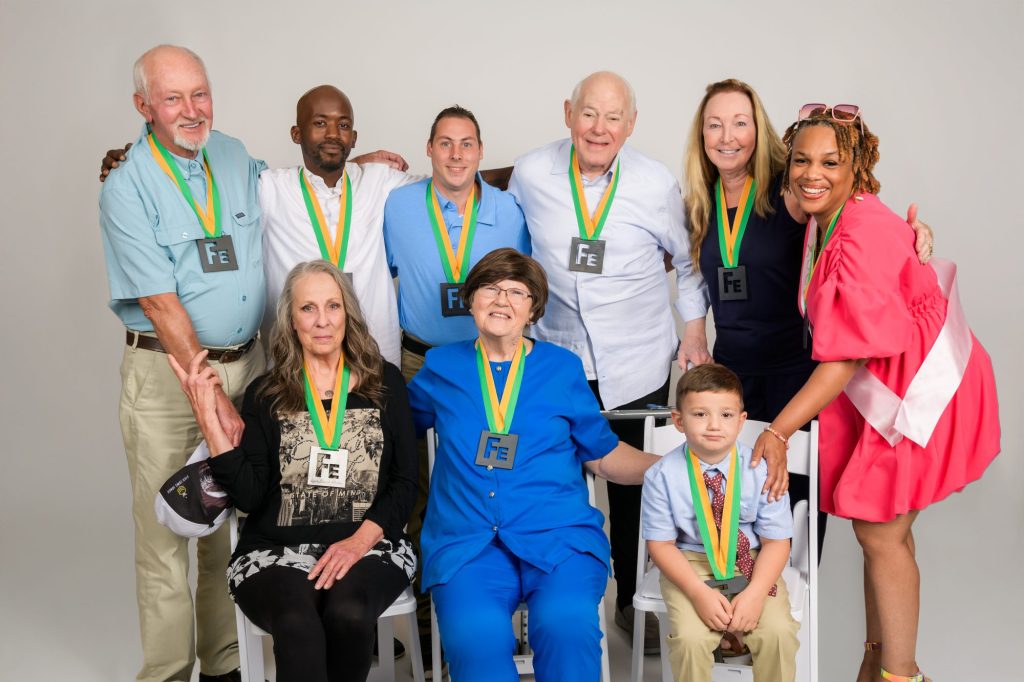
(Left to Right, Top: Donnie Jones, Jesse Webb, Michael Clay, Raymond Gotlieb, Kimberly Pacheco, Latrivia Carter. Left to Right, Bottom: Wanda Harrod, Linda Winters, Kingston Jessip.)
Latrivia Carter
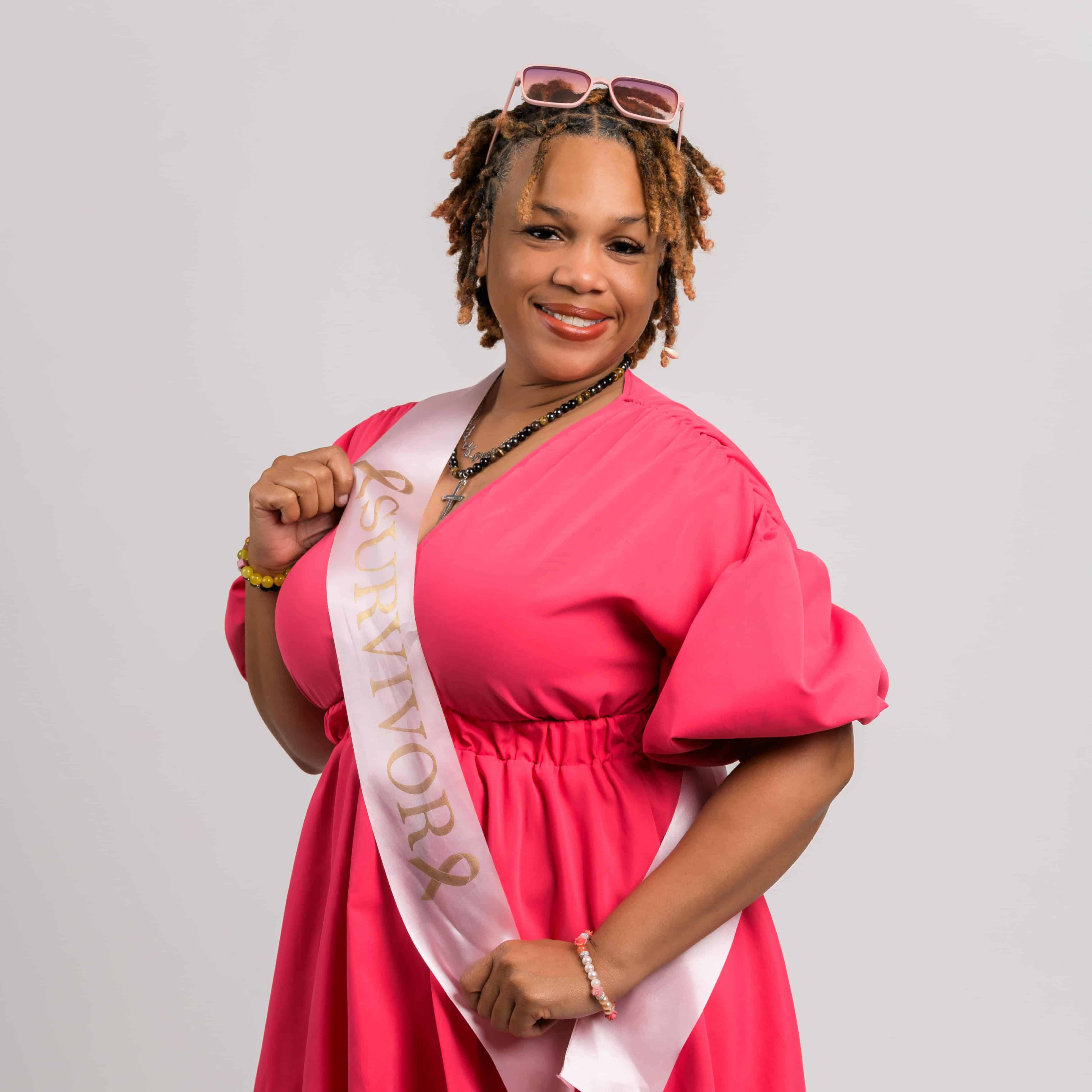
Physician: Katia Khoury, M.D.
Cancer type: Breast Cancer
Even though she was not yet 40 years old, Latrivia Carter knew exactly what she faced after being diagnosed with Stage 2 triple-negative breast cancer late in 2022. That’s because just two years earlier, one of Carter’s sisters passed away from the same disease.
“I instantly panicked, because I was thinking about what my sister went through and how she didn’t make it,” Carter says.
So Carter decided to try something different. Under the guidance of Katia Khoury, M.D., an assistant professor in the UAB Division of Hematology and Oncology, Carter enrolled in the I-SPY 2 clinical trial, which incorporates new medications to treat breast cancer in a more personalized way, with less chemotherapy.
“I saw what my sister went through with regular chemo, and I don’t think I could have done that,” Carter says. “I’m sure Dr. Khoury knew I was thinking about my sister, so she made me feel at ease. She explained everything very carefully and gave me different choices (for treatment), including the trial study.
“During the trial, the people at UAB were very encouraging. They kept saying, ‘You’re going to get through this. We’re going to figure it out.’ They constantly stayed in touch with me and helped me if I had any issues.”
As part of the trial, Carter received a new medication combined with a standard immunotherapy. Her reaction to the treatment was closely monitored through a series of regular MRI exams.
“That way we could see in real time how she was responding to treatment,” Khoury says. “If she was having a good response, we could omit more of the standard chemotherapy. So we personalized the treatment in an effort to optimize the standard of care, and also minimize toxicity for the patient.”
Carter’s response wasn’t merely good. Khoury says it was “fantastic.” Her tumor shrank significantly within months, to the point that Carter ended up needing only one round of chemotherapy followed by clean-up surgery in September of 2023. She was declared cancer-free less than a year after her initial diagnosis.
“Her cancer just melted away,” Khoury says. “She had a complete response. Nearly 2 years later, there is no evidence of cancer in her breast of lymph nodes.”
In addition, Carter says she experienced no major side effects to the trial medication. During treatment, she continued to go to work and take care of her three children. Because of such positive responses, Khoury says this treatment recently was approved as a standard of care for advanced breast cancer.
“I had no bad experiences, other than a few moments where I felt tired. But for the most part, it was a breeze,” Carter says. “This trial study was heaven-sent. It did so much for me.”
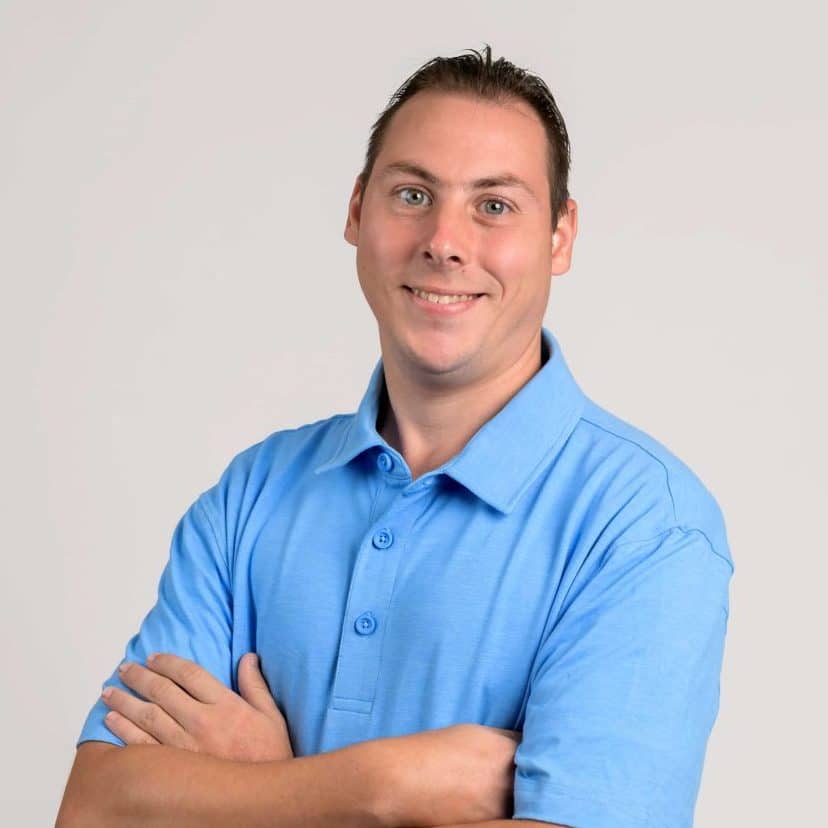
Michael Clay
Physician: Julie Wolfson, M.D.
Cancer type: Acute Lymphoblastic Leukemia
More than three years after being diagnosed with acute lymphoblastic leukemia (ALL), Michael Clay finally completed an extensive series of chemotherapy treatments through Children’s of Alabama in 2020 and was declared cancer-free. It was such a momentous occasion that his small hometown of Fruithurst near the Alabama-Georgia state line threw a celebration in his honor.
Moments like that make the physicians and cancer researchers at UAB celebrate as well. Mostly because they have achieved another positive outcome, but also because they usually have gathered important information through clinical trials that can be used to improve cancer care for future pediatric patients.
“In pediatric oncology, the family of every patient is offered a clinical trial if we have one, because that is the way we improve our outcomes over time,” says UAB associate professor Julie Wolfson, M.D., MSHS, a pediatric hematologist-oncologist and health services researcher. “We now have over 90 percent survival for patients with ALL, and it’s because these trials have enabled us to make systematic improvements to the therapies.”
Michael’s mother, Kelly Clay, was not thinking about any of that when she made the drive from Fruithurst to Children’s of Alabama late in 2015. All she knew was her son was suffering from a variety of mysterious ailments, including swollen lymph nodes, and she was looking for answers.
When Clay received the leukemia diagnosis, she was told that one of the potential treatments involved a clinical trial being conducted by the Children’s Oncology Group, an international research collaboration involving more than 200 institutions, including Children’s of Alabama.
“This was all new territory to me, so I called my oldest sister and she thought I should try it,” Clay says. “She said they’re not going to let a child go without proper treatment, so he’d be cared for. And the things they learn can help other children beat this in the future.”
Michael’s situation was a bit more complicated than most because he has learning disabilities. As a result, Wolfson says, “We treated him very cautiously.” When Michael reacted poorly to some of the medications, the dosage was reduced. This enabled Michael to continuing receiving treatments that were starting to eliminate the cancer, but it caused those treatments to take longer than expected.
“Because he was so fragile, he had quite a few complications that we had to provide supportive care for,” Wolfson says. “He had a rough time, but we knew this treatment was going to be the best option for him.”
The outcome certainly has been positive, as Michael recently reached the all-important five-year mark since his treatment ended and remains in remission.
“The people at Children’s absolutely made the whole thing as easy to handle as it could possibly be,” Clay says. “They took such good care of Michael and treated him like he was a superstar. They are so good with everyone they work with there.”
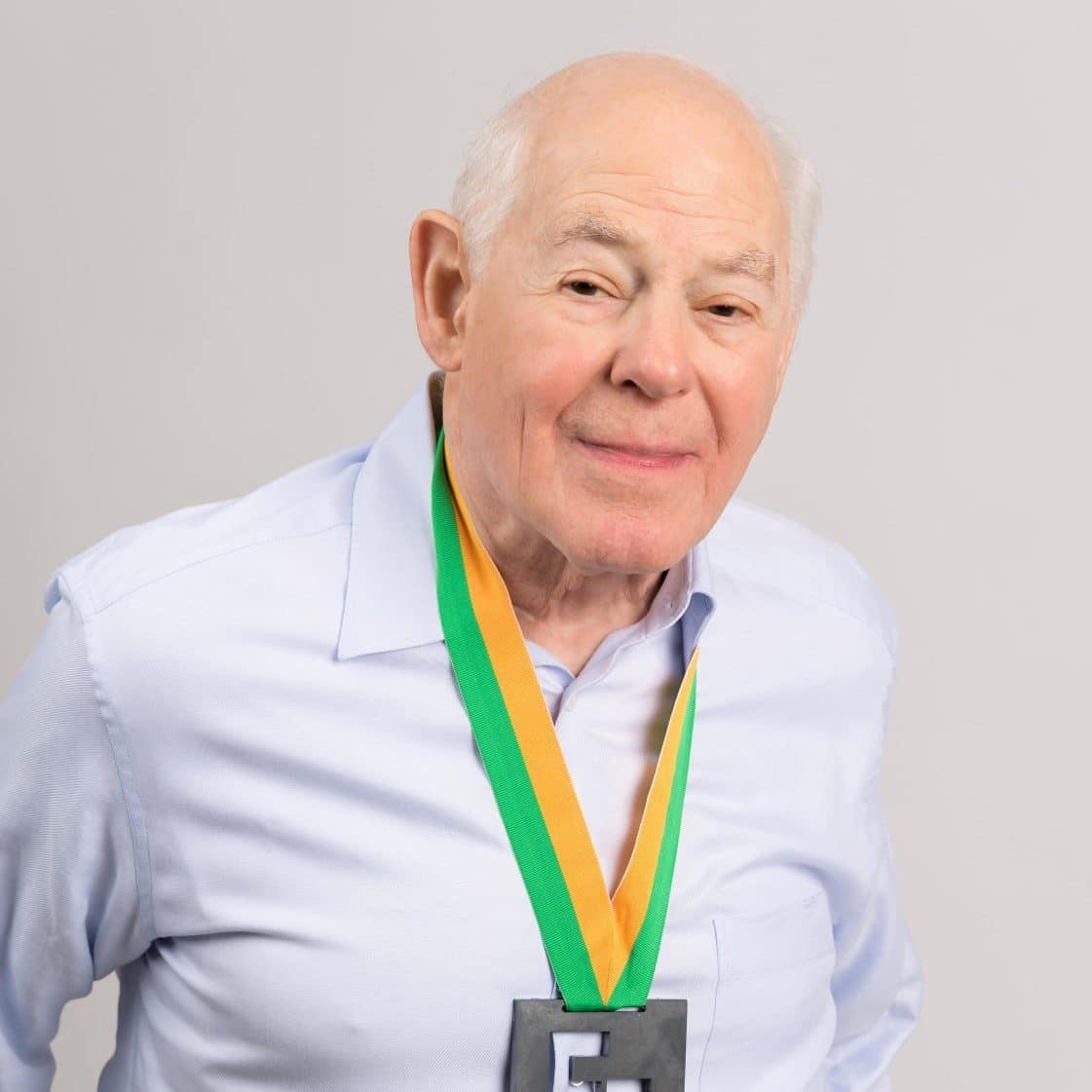
Raymond Gotlieb
Physician: Pankit Vachhani, M.D.
Cancer type: Leukemia
After six years of dealing with a rare form of leukemia that required regular blood transfusions for treatment, Raymond Gotlieb faced a choice. Either continue with the transfusions – perhaps as often as once a week – or enroll in a Phase 1 clinical trial of an oral medication designed to improve his red blood cell count. As far as Gotlieb was concerned, it was an easy decision.
“If there was even a possibility of the trial helping me, I was willing to try it. There really wasn’t much question about it,” Gotlieb says. “It never crossed my mind not to do it. Anything would have been better than getting all those transfusions.”
By then, Gotlieb certainly had plenty of first-hand knowledge about what the blood transfusions were like. He began having the procedure after his initial diagnosis in 2013 at age 74, and continued them for most of the rest of decade.
But while his condition remained stable during this time, the transfusions themselves gradually became less effective. As a result, Gotlieb went from undergoing the process once every six weeks when he started, to once every 10 days or so by 2019. The time-consuming and energy-draining procedure was close to becoming a weekly occurrence in his life.
“It got to the point that he was requiring so many blood transfusions, he was becoming very fatigued,” says Pankit Vachhani, M.D., an assistant professor of medicine in the UAB Division of Hematology and Oncology. “Blood transfusions increase the iron levels in a person. We want the will of our patients to be iron strong, but we don’t want them to be filled with iron.”
So Gotlieb began the clinical trial in October of 2019, and he quickly went from needing transfusions to being transformed. The oral hypomethylating agent, called ASTX-727, began producing positive results in a manner of months. Gotfried’s transfusion requirements steadily decreased, then eventually were eliminated entirely.
“He’s had dramatic success by going on the clinical trial,” Vachhani says. “When I first met him, he was always tired. Now he’s doing so much better. It’s been amazing.”
Gotlieb continues taking the medication, and he returns to UAB every five weeks for evaluation. Other than that, his health is strong enough that – at age 86 – he still puts in regular work hours as founder and president of the Birmingham-based Metropolitan Properties real estate company.
“The medication has been doing its job, and I don’t really have any other health issues right now,” Gotlieb says. “Dr. Vachhani has been real easy to work with. He’s always available whenever I need to talk with him. And the people and facilities at UAB have been outstanding. If you’ve got to go through something like this, I couldn’t have asked for anyplace better.”
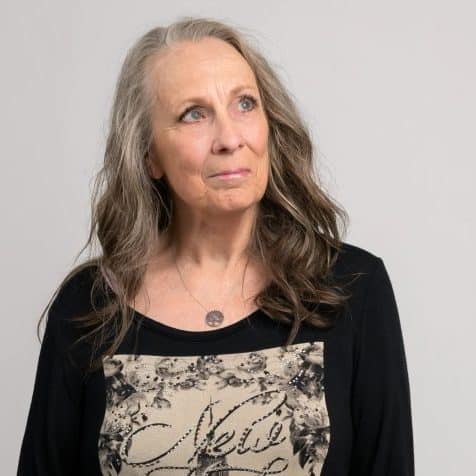
Wanda Harrod
Physician: Maya Khalil, M.D.
Cancer type: Lung Cancer
Wanda Harrod woke up on Aug. 4, 2021 with lingering neck pain that had been bothering her for a few days. She attributed it to soreness from working at her job as a hairdresser, and made an appointment to see her chiropractor.
Before the end of that day, Harrod was having surgery to remove a tumor on her spine that was so large it had created a fracture in the bone, which was causing the neck pain. It also was discovered that the tumor had spread from its origination in the lung. Harrod was diagnosed with stage 4 non-small cell lung cancer, which had a survival rate of less than 15 percent.
“All that happened in one day,” Harrod says. “August 4, 2021 doesn’t go away for me. I’ll always remember it.”
Since then, however, Harrod has had several good days to remember as well. Two months after the initial diagnosis and surgery, Harrod began treatment through a clinical trial that added a second immunotherapy drug to the regular standard-of-care. The remaining cancer in her body began to shrink steadily, and by the end of 2022 the primary tumor on her lung had become smaller than the size of a marble.
Unfortunately, after 15 months of treatment, the drugs began to cause severe inflammation in her stomach, and Harrod eventually was taken off that therapy. However, enough progress already had been made that most of the residual cancer was more easily treated through radiation. And for the past two years, regular CT scans have shown no signs of reactivation.
“That is almost unheard of in metastatic lung cancer, but her disease responded beautifully to the immunotherapy,” says Maya Khalil, M.D., an Assistant Professor of Medicine in the Division of Hematology & Oncology at UAB. “It did cause side-effects, which can be an unfortunate part of medicine. But she derived a lot of benefit in terms of getting the cancer under control.
“She has been through a lot with the treatment and the side effects. But she’s a fighter. She still has a positive attitude about everything, which is remarkable.”
Indeed, while stating that the days since Aug. 4, 2021 definitely have been difficult at times, Harrod says she cannot complain about the current outcome.
“The people at UAB saved my life,” Harrod says. “Had my cancer gone on much longer (before being discovered), I’d probably have died. And even after surgery, there was a time when I wouldn’t have made it six months with that type of cancer. Instead, I’m still here four years later, and I do just about anything I want to do.
“These trials are what makes that possible. If you don’t have people doing these trials, then the medicines can’t be tested. And they can’t learn about them if they can’t use them. I’m glad I was a part of something that helped me, and might help someone else down the road.”
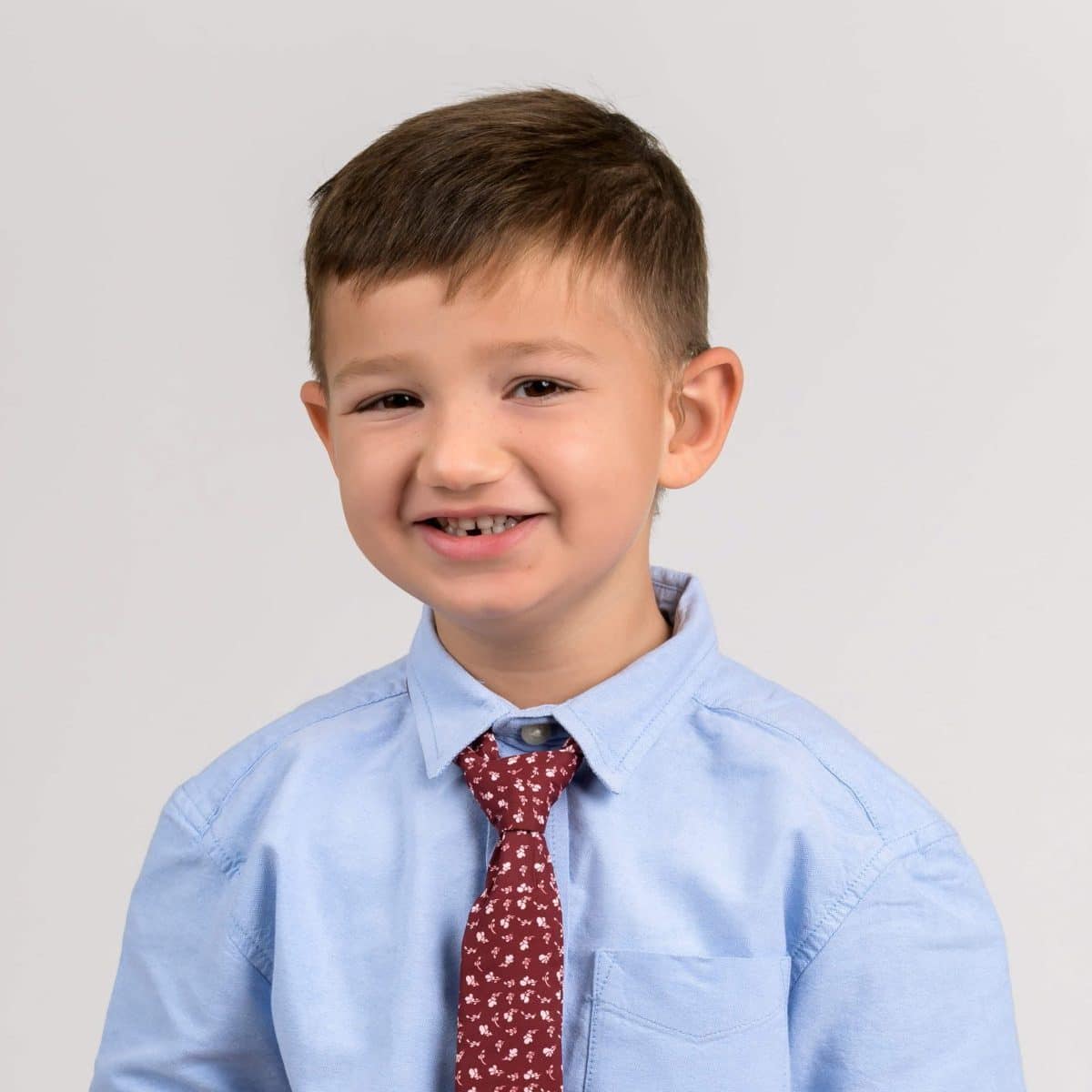
Kingdon Jessip
Physician: Emily Johnston, M.D.
Cancer type: Neuroblastoma
Kingston Jessip has dealt with a lot in his struggle with high-risk neuroblastoma cancer. Six months of induction chemotherapy. Surgery to remove as much of the tumor as possible. Another round of high-dose chemo along with two stem cell transplants. Then radiation, followed by six months of immunotherapy.
It is enough to wear down the heartiest of individuals, and Kingston definitely had some anger issues along the way. What makes his situation particularly amazing is that all this treatment occurred before Kingston’s 6th birthday, and took place without much input from his biological parents, who have substance-abuse issues.
But two things happened that helped Kingston come through it all and has provided a more optimistic outlook on his young life. First, his treatment included two clinical trial medications designed to improve the current 50 percent survival rate for children with neuroblastoma.
“We looked at the genetics of the tumor upfront to find a targeted medicine that we could add to his treatment,” says UAB pediatric oncologist Emily Johnston, M.D. “Then we added another medicine, DFMO (difluoromethylornithine), to the treatment after he was finished with everything else. That drug is now FDA approved because of these clinical trials.”
The medical results have been successful so far, as Kingston is now 7 years old and currently cancer-free. In addition, Kingston’s emotional situation has improved as well, partly because he has a new home in Cullman with foster parents William and Barbara Jessip. They agreed to adopt Kingston after hearing about his situation at a church prayer meeting, even though they are in their late 60s.
“This wasn’t in our retirement plan,” Barbara Jessip says with a laugh. “But because of his condition, they were having a hard time finding anyone in the state who would take him. We really felt led to do this, though we’re not spring chickens. But since we’re retired, we have the time to give him the care and attention he needs.”
Jessip acknowledges that Kingston was dealing with some significant anger issues while undergoing treatment. She attributes that to the fact he had been painfully poked and prodded throughout his young life. Jessip says she was impressed at how well the nurses and others who were treating Kingston handle his frequent outbursts.
“His social skills had deteriorated, and he was lashing out at everyone,” Jessip says. “But Dr. Johnston and the nurses all had tremendous compassion. I never saw them get frustrated.”
Jessip says Kingston is steadily improving both physically and emotionally, and even played organized T-ball this year.
“He has been such a blessing to us, even at our age,” Jessip says. “He’s still a scrapper. He won’t back down to anything. But I attribute that part of his personality to how he was able to pull through. Because if he hadn’t been such a scrapper, I don’t know if he would have survived.”
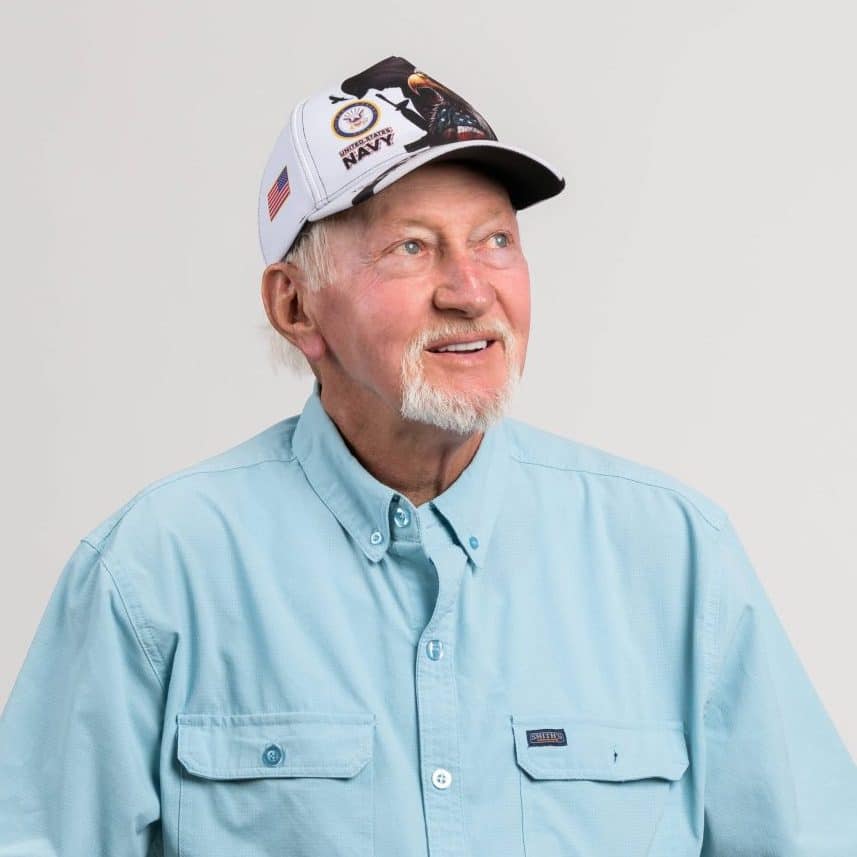
Donnie Jones
Physician: Amitkumar Mehta, M.D.
Cancer type: Non-Hodgkin Lymphoma
Donnie Jones’ Facebook page lists his work as being, “Happily Retired.” The key to that phrase is the “happily” part. Because for much of his retirement, the 72-year-old Jones has been participating in a UAB clinical trial for the treatment of a rare and aggressive form of non-Hodkin lymphoma.
Since 2019, Jones has been on a regimen of taking a daily pill for seven consecutive days every other week. This has required him to make the two-hour roundtrip from his home in Altoona to UAB approximately once a month for evaluation. But my making that regular trek, Jones also is able to make the regular drive to pick up his granddaughter from school.
“I’m going on my seventh year of taking the trial medication, and the cancer is still in remission,” Jones says. “Really, everything about UAB has been a pleasure. They’ve gone out of their way to make things easier for me. Since I pick up my granddaughter from school every afternoon, they schedule my visits for in the morning so I can get back home in time. They’ve been great to me.”
After his initial cancer diagnosis, Jones underwent surgery to remove a tumor from his right arm, followed by a round of chemotherapy. But the chemo was only partially effective, and Jones still had swelling in his lymph nodes.
That is when Jones was referred to Amitkumar Mehta, M.D., an Associate Professor of Medicine at UAB and director of the Lymphoma Program. Mehta says Jones faced “very limited treatment options.” So Mehta suggested a clinical trial involving a molecule that was so experimental it didn’t even have a name yet, it simply was called “ESTX0660.” But that did not deter Jones.
“Dr. Mehta and the nurses explained everything to me about what they expected this trial to do,” Jones says. “Sometimes you just have to trust the doctor. I know absolutely nothing about medicine. They told this should help my situation, so I just went with it.”
According to Mehta, the trial drug inhibits the proteins that cause healthy cells to die, and blocks the continued growth of the cancer cells. He says Jones had had “an excellent response with no serious side effects.”
“In addition to treating the cancer, the most important part is making sure the patient is able to live a normal life, and Mr. Jones has done that,” Mehta says. “Cancer is a very scary diagnosis. But cancer survival has improved over the last couple of decades, and part of the reason is we have good clinical trials like this one.”
In addition to keeping the cancer in check, Jones has experienced another health benefit while undergoing his treatment. He recently quit smoking, a habit he maintained throughout his 26 years in the U.S. Navy.
“I actually smoked quite heavily,” Jones says. “When I quit smoking, Dr. Mehta thought that was the greatest thing in the world.”
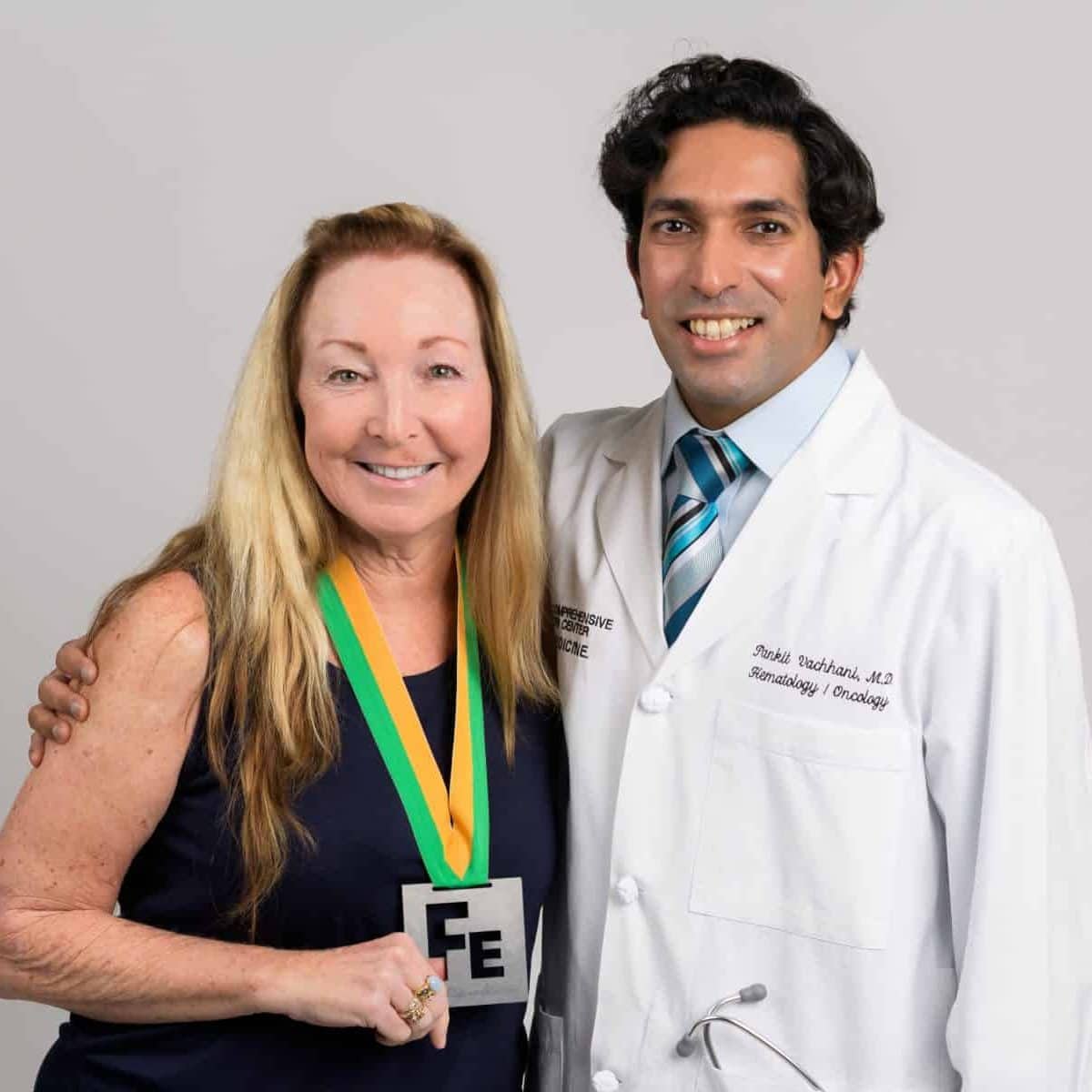
Kimberly Pacheco
Physician: Pankit Vachhani, M.D.
Cancer type: Mastocytosis
You don’t spend more than 30 years in the United States Air Force, as Kimberly Pacheco did, without having a bit of toughness and determination to you. But in 2019, Pacheco began to lose that fighting spirit because of a mysterious illness that was debilitating her.
While serving at Tyndall Air Force Base near Panama City, Fla., Pacheco started struggling with a wide variety of issues, including nausea, skin legions, muscle and bone pain, headaches, dizziness and fatigue. Physicians in the area could not pinpoint the problem, and Pacheco finally was forced to take an honorable discharge from the service.
“It was getting to the point where it was hard for me to do anything,” Pacheco says. “I was on a whole bunch of medicines, but I just kept getting sicker and sicker.”
Finally, Pacheco received a recommendation to visit UAB for evaluation. Before long, she was diagnosed with mastocytosis, a rare cancerous condition that affects only 1-in-100,000 people. Pacheco began receiving treatment though the UAB Mastocytosis Clinic, a designated Center of Excellence by the American Initiative in Mast Cell Diseases Network.
“We tried a few medications, but she didn’t really respond well,” says clinic director Pankit Vachhani, M.D., an assistant professor of medicine in the UAB Division of Hematology and Oncology. “So in 2023, she agreed to go on a study we were conducting called APEX, where we gave her high doses of an oral TKI (tyrosine kinase inhibitors).
“After that, she improved remarkably. Now her pain issues are nearly gone, the skin legions are much improved, her energy level is back. Nearly every symptom has improved and she has a new vigor in her life. She’s back to living like she used to, with really no concerning symptoms.”
In fact, the results for Pacheco and other patients in this clinical trial have been so promising that Vachhani says the drug is expected to receive FDA approval next year.
Pacheco says she technically isn’t cured, since cancer cells remain in her bone marrow. She continues to take three pills a day, and make the nearly 10-hour roundtrip from Panama City to UAB once a month for blood work.
But considering what her life was like just two years ago, Pacheco says she has no complaints. And while she certainly credits the medication itself with prompting her recovery, she says it was Vachhani and UAB that pointed her in the right direction.
“My trust in Dr. Vachhani and the team at UAB is unquestionable. I can’t say enough good things about them,” Pacheco says. “Everybody there truly pays attention to the patients. They listened to me and understood the difficulties I was having, and figured out what was wrong.
“Where I had been dying, now I’m living. It’s pretty much a miracle to me. I’m alive because of UAB. The most important thing for me through all this was getting to the right people. And UAB has the right people.”
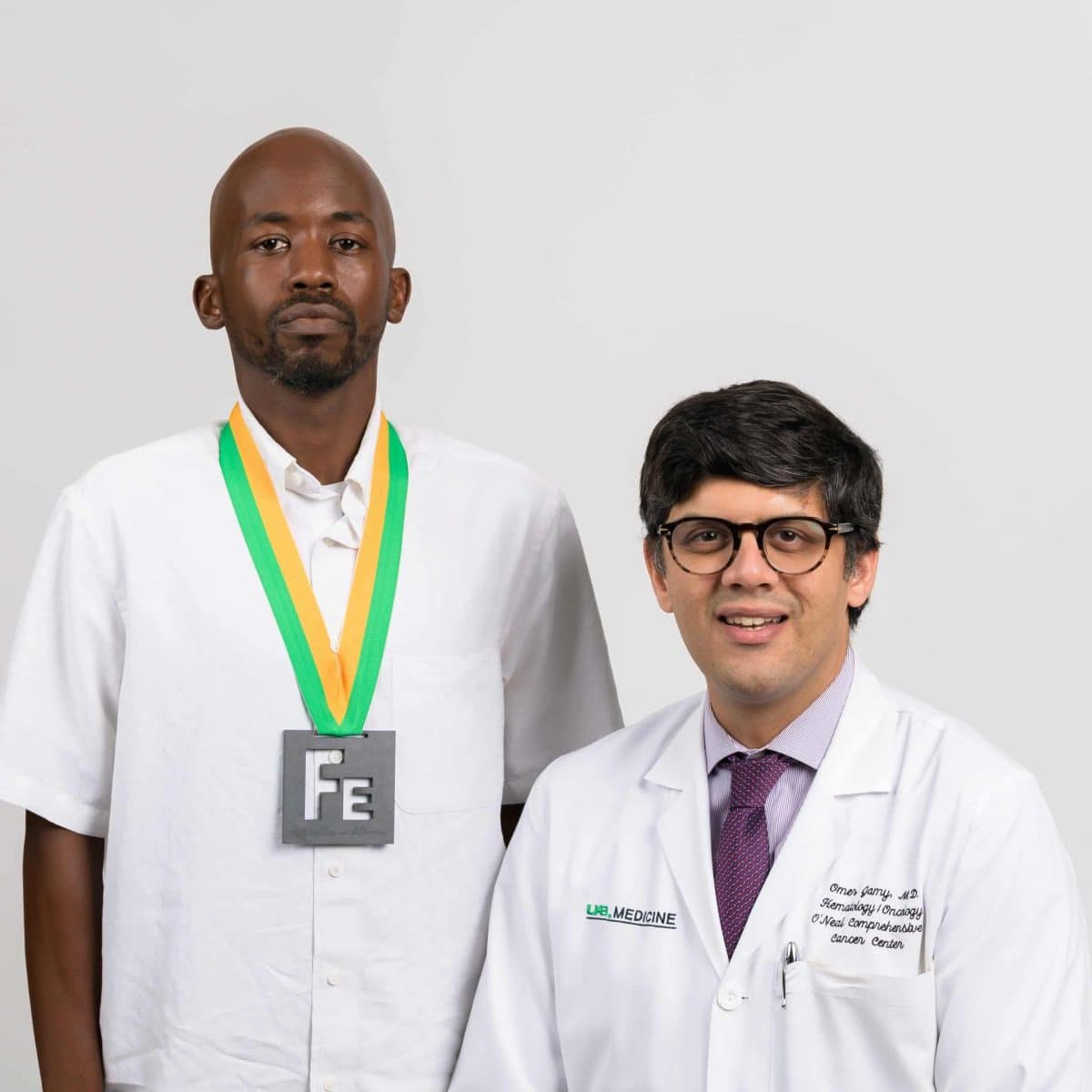
Jessie Webb
Physician: Omer Jamy, M.D.
Cancer type: Chronic Myeloid Leukemia
After Jessie Webb was diagnosed with chronic myeloid leukemia 20 years ago at age 15, medication became a regular part of his life. Eventually, Webb was taking nearly a dozen pills every single day.
“I took so many different medications for so long, I just got used to it,” Webb says.
The problem was, doctors warned Webb that such a routine could have a detrimental effect on his heart and other organs with decades of repetition. Plus, there was evidence throughout his 20s that the effectiveness of the medications was slowly diminishing.
“We explained to him that the chances of the pills giving him long-term control of the disease were low, especially because his leukemia had become more aggressive since it was first diagnosed,” says Omer Jamy, M.D., an associate professor at UAB specializing in hematology and oncology. “So we suggested at his young age, he should consider a bone marrow transplant.”
Webb agreed, and underwent the procedure in 2021. He also signed on to be part of a Hematopoietic Stem Cell Transplantation clinical trial, a Phase 3 study in which half the participants were given an additional medication called Vedolizumab to test if it can help prevent graft-versus-host disease (GVHD) of the lower gastrointestinal tract.
“GVHD is one of the complications that can occur from a bone marrow transplant, and it can lead to all sorts of problems, even death,” Jamy says. “Every person who gets a donor transplant, we give them medicines as standard of care to prevent GVHD, but people still end up getting it. So a lot of research is geared toward trying to prevent this complication in our patients.”
Webb admits he initially was hesitant to participate, but eventually decided he had already taken so many medications in his life that it probably wouldn’t hurt to try one more.
“I was a little iffy at first, not knowing how I’d react to it,” Webb says. “But they talked me through everything and made sure I knew exactly what was going on. So I decided to try it and see how it would turn out.”
Webb was one of 343 patients to take part in the trial, with UAB supplying 70 of the participants. Since it was a blind trial, Jamy says it is not known whether Webb actually received Vedolizumab. But he says Webb came through the transplant with no complications, and more than four years later he continues to test negative for both leukemia and GVHD.
The results of the study, which were published last year in the journal Nature Medicine, showed that adding Vedolizumab to standard therapy decreased the chances of a patient developing GVHD, and improved the overall outcomes.
As for Webb, not only does he remain in remission, but he says, “I am down to taking only one pill a day. So that’s good.”
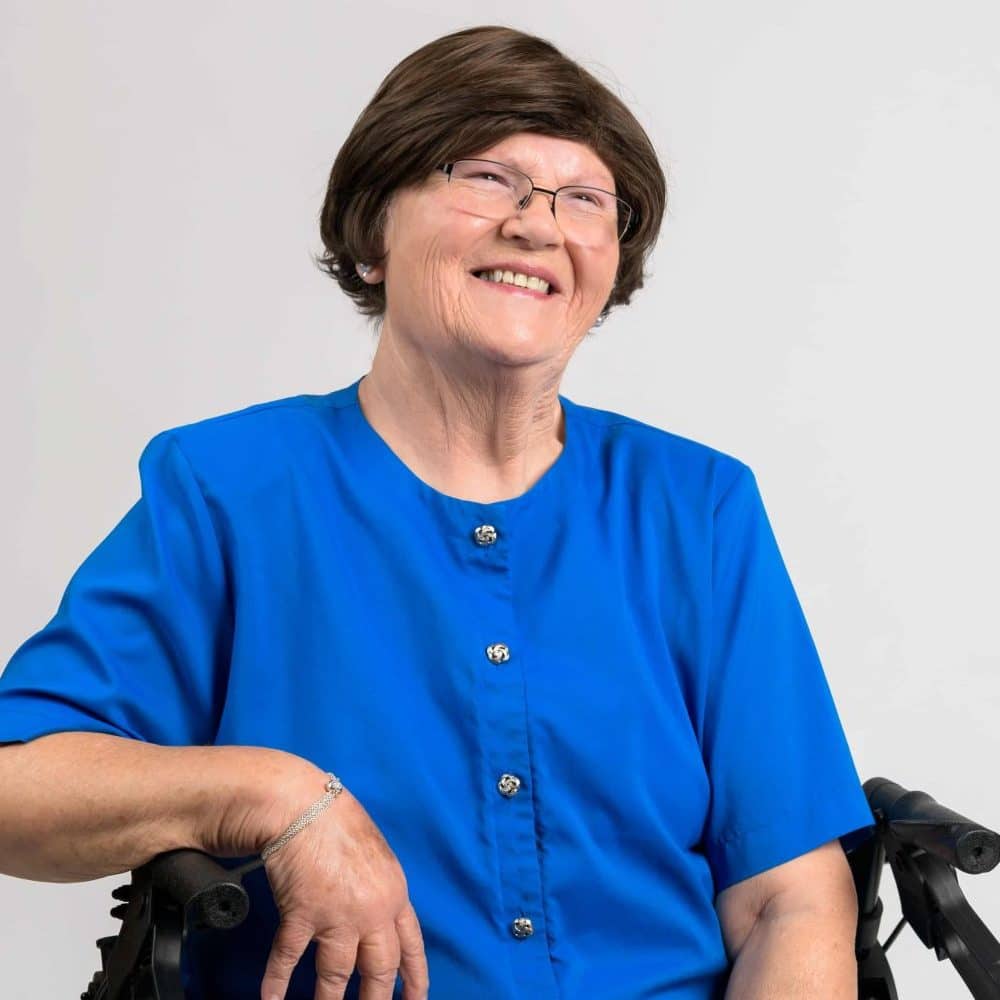
Linda Winters
Physician: Charles Leath III, M.D.
Cancer type: Gynecologic Cancer
When Linda Winters was first told she had a large tumor on her cervix that had been diagnosed as Stage 4 cancer, she admits “it felt like a death sentence.” That was nearly seven years and an astounding 106 cycles of treatment ago.
“I’m still hanging around,” says Winters, a great-grandmother who is about to turn 76.
Much of the credit goes to a personalized treatment option that Winters received from Charles Leath III, M.D., director of the UAB Division of Gynecologic Oncology. After a standard round of chemotherapy that eliminated much of the tumor, Winters began taking a combination of trastuzumab and pertuzumab, two drugs that traditionally have been used to treat breast cancer.
“These drugs target genetic mutations,” says Anna Wilbanks, MSN, RN, a research nurse manager for UAB Oncology clinical trials. “Her tumor acted more like a breast cancer tumor than an endometrial tumor. So these drugs have worked specifically for her to keep her cancer stable. It’s personalized medicine.”
Winters and her husband make the two-hour roundtrip from their home in Northport to UAB once every three weeks for treatment. In addition, she undergoes an echocardiogram and a CT scan every three months for evaluation. It is a routine Winters has followed steadily since 2019.
“To be on a clinical trial for this long takes dedication from the patient,” Wilbanks says. “I give her a lot of praise, because she has been consistent. She comes when she is supposed to, and she communicates with the clinical team if she ever needs to miss an appointment. She has been very dedicated to this trial.”
Winters says one of the reasons she has been willing to continue the treatment for so many years is because the side effects have been relatively minor.
“It’s much different from the chemo. It’s a lot easier on your body,” Winters says. “Sometimes I’m a little more tired, but that may just be my age. Other than that, I’m basically able to do anything I was doing before (the cancer diagnosis).”
Of course, the main reason Winters has continued the treatment is because it’s working. She also credits the people at UAB with making the entire ordeal more tolerable.
“The encouragement I get from the doctors and the nurses and all the staff at UAB is wonderful,” Winters says. “They’re caring people who are concerned not only for the patients, but for the families also. I appreciate that so much. You need that kind of encouragement when you’re going through something like this.
“I’m also very appreciative of how diligently the doctors and researchers are working to find cures, and that they’re using the wisdom and skills they were given to do this. And most of all, I’m thankful that I’m still here after all this time.”