


UAB Physician Performs Alabama’s First Deceased Donor Bone Marrow Transplant
More than 18,500 Americans are diagnosed each year with blood cancers that may require a bone marrow transplant. A multidisciplinary team at UAB has expanded treatment options by successfully performing Alabama’s first deceased-donor bone marrow transplant — an innovative approach that increases access to finding a suitable donor in time.
Physicians at the UAB Marnix E. Heersink School of Medicine led the procedure in collaboration with specialists across leukemia care, radiation oncology, transplant coordination and cellular therapy.
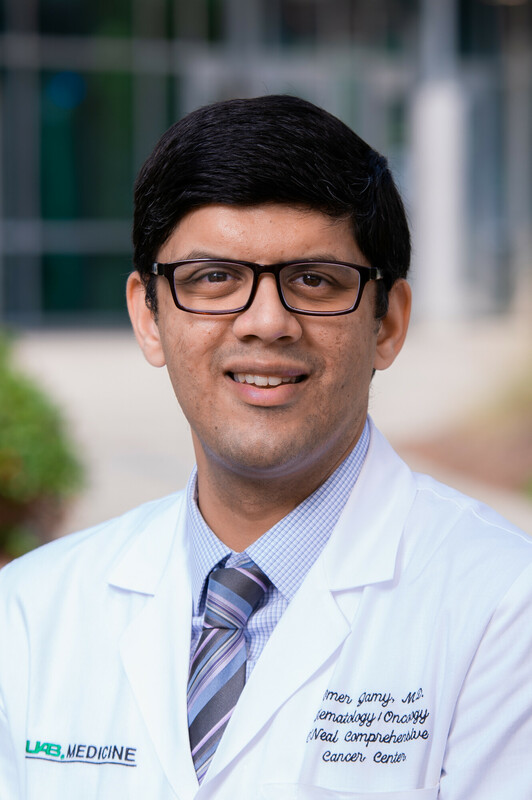
“Allogeneic bone marrow transplantation can be curative for many patients, but one of the biggest limitations has always been timely donor availability,” said Omer Jamy, M.D., associate professor in the Division of Hematology and Oncology and medical director of the Clinical Trials Office at the UAB O’Neal Cancer Center. “This innovative approach allows us to move forward when living-donor options are unavailable, saving critical time for patients with urgent needs.”
How does a deceased-donor transplant work?
An allogeneic bone marrow transplant uses stem cells from a donor to replace damaged or diseased bone marrow in the patient. These transplants are commonly used to treat aggressive blood cancers such as leukemias and lymphomas.
Traditionally, these procedures have relied on stem cells collected from living donors. By incorporating stem cells from deceased donors, which can be collected, preserved and made readily available, the UAB transplant team can significantly reduce delays and offer transplants when timing is critical.
“This advancement reflects our commitment to ensuring more patients have access to curative therapies when they need them most,” Jamy said. “Expanding the donor pool helps us reach patients who may not otherwise have a viable donor option.”
What do patients need to know?
Jamy emphasizes that, with deceased donors added to the donation pool, every patient needing a bone marrow transplant at UAB should be able to receive one.
“Our ongoing innovation at the O’Neal Cancer Center, its diverse patient population and active clinical trials program enable us to match patients with the most appropriate and advanced treatment options available,” Jamy said.
How can you help?
While deceased-donor grafts offer new flexibility, many patients still rely on living donors identified through registries such as the National Marrow Donor Program. Jamy particularly encourages younger patients from all racial and ethnic backgrounds to join the registry to improve match rates and save lives.
“Becoming a donor is a straightforward outpatient process similar to donating blood, and it plays a vital role in helping patients receive timely, potentially curative treatment,” Jamy said.
Originally published on the UAB News website; read the original article online at: https://www.uab.edu/news/health-medicine/uab-physician-performs-alabamas-first-deceased-donor-bone-marrow-transplant.